Golf Cart Controller: Safety is the Prerequisite for All Functions
Golf Cart Controller: Safety is the Prerequisite for All Functions
What matters most for a golf cart? Safety.
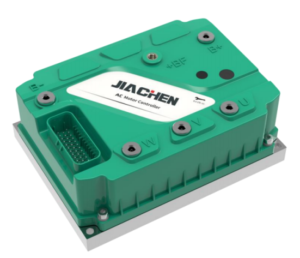
As the brain of the vehicle, every line of code and every logic decision in the controller should revolve around safety. My solution combines speed mode, smart self-diagnostics, downhill speed limiting, uphill anti-rollback, and electromagnetic brake interlock.
First thing upon power-up: self-check.
The controller does not rush to drive. It runs a full check first.
Is the accelerator pedal at zero position? Is the gear selector signal valid? Are there any loose connections or broken wires? Is the motor phase connection intact? Is the brake circuit closed? Is CAN communication online?
If any abnormality is detected, the controller immediately enters protection mode, refuses to drive, and outputs a fault code.
The first rule of safety: no confirmation of safety, no power output.
Downhill: no freewheeling, controlled speed.
Coasting downhill? Not acceptable.
When the controller detects a downhill slope, it actively applies motor regenerative braking to limit the speed within the set range. This is the speed limiting function. The moment the speed drops to zero, the electromagnetic brake engages automatically.
The safety principle: speed must be controlled, and stopping must be locked.
Uphill: lock at the instant of standstill, do not wait for rollback.
Going uphill, the driver releases the accelerator. The speed gradually drops to zero. If nothing intervenes, gravity will cause the cart to roll backward.
My controller triggers the electromagnetic brake at the exact instant the speed reaches zero. It does not wait for the cart to start rolling back; it locks right at that moment of stillness.
Why not wait until rollback occurs? Once the cart begins rolling backward, the driver is likely to stomp the accelerator. The controller then has to handle forward gear, backward motion, and a high current command simultaneously. Any slight deviation can lead to loss of control. Prevention is always better than cure.
Why must it be an electromagnetic brake?
Electronic braking can fail when power is lost, and on steep slopes the motor may not have enough current to hold the cart.
The electromagnetic brake is a pure mechanical lock. It holds even when power is cut off, and it works regardless of the slope angle. Electronic control handles smooth deceleration, while mechanical locking guarantees absolute stillness. The two work together and neither is dispensable.
In one sentence:
Check yourself first on power-up. Stay stable on flat ground. Slow down controllably on downhills. Lock firmly on uphills.
A golf cart controller does just one thing: write safety into every line of code, so that the cart always responds to the driver as intended, in any situation.
Introduction:Electric golf carts are no longer just a tool exclusive to golf courses; they have become the preferred transportation choice for more and more users. With increasing environmental awareness and technological advancements, electric golf carts are now showcasing unique advantages across various sectors. So, why are electric golf carts becoming the future trend? Body: Conclusion:Overall, […]
Introduction:As an eco-friendly and cost-effective transportation tool, electric golf carts are gaining popularity. However, how can you maintain and extend the lifespan of your electric golf cart? In this blog, we will share some simple and effective maintenance tips to help you ensure your cart stays in top condition for years to come. Body: Conclusion:By […]
Introduction:When buying a golf cart, many people find themselves debating between electric and gas-powered models. So, what’s the difference between electric and gas golf carts, and which one is better suited for your needs? In this blog, we will provide a detailed comparison to help you make the best decision. Body: Conclusion:Whether you choose an […]
Prohibition on Using Lead-Acid Chargers for Lithium BatteriesFor common 48V and 72V electrical systems, the full charge voltages of lead-acid and lithium batteries are different, and their charging logic is also not the same. Using the wrong type of charger may, at best, prevent the battery from reaching a full charge, and at worst, cause […]
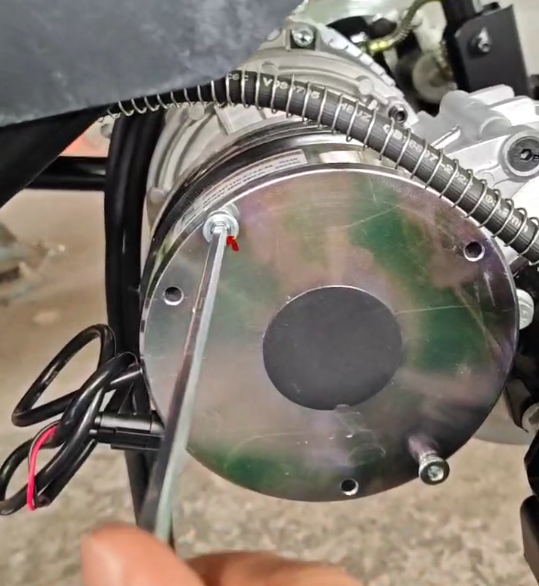
Electromagnetic brakes are commonly found in mid-to-high-end electric golf carts, typically mounted on the rear end of the drive motor. Their primary role is to serve as a parking brake, and in some models, they also function as an emergency braking aid. The core design principle is: energize to release, de-energize to lock — the brake pads are […]
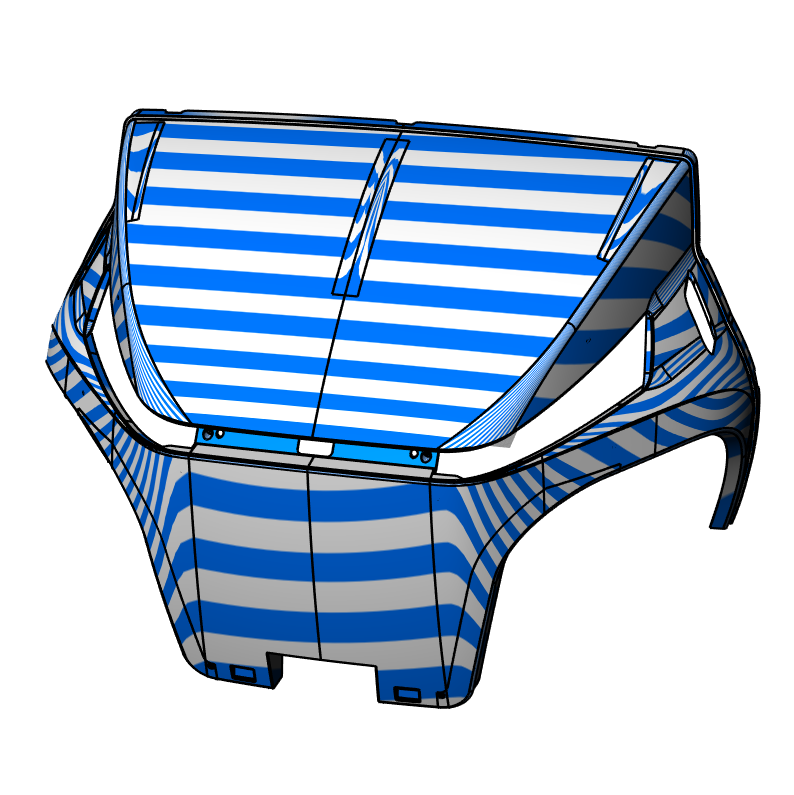
(Exterior A-level curved surface standard) For the exterior components such as the body, front face, side wings, and roof of a golf cart, the commonly used CAS modeling surface (conceptual A-level surface) in the automotive industry is used to construct the process. Taking Rhino, a mainstream industrial design modeling software, as an example. It is […]

.jpg)